Get Canary Mail
- How To Add Icloud Email To Outlook 2016 For Mac Catalina
- How To Add Icloud Email To Outlook 2016 For Mac Osx
- How To Add Icloud Email To Outlook 2016 For Mac Os
- How To Add Icloud Email To Outlook 2016 For Macbook Pro
Nowadays, cloud services have become indispensable and, let’s face it, there’s no turning back. If you have any Apple device, it means you’re likely to almost inadvertently be using iCloud — Apple’s solution for you to securely store, sync, and access all of your digital stuff online. Right from the get-go, iCloud comes with 5 GB of free storage for your photos, videos, documents, music, and apps.
IMAP is one of the most popular email protocols out there, and is often used to collect email from a user-owned domain. ICloud, meanwhile, is heavily used by Mac/iPhone users. Learn how to set up iCloud email on Outlook 2016 for Mac (preview). Outlook 2016 for Mac preview was publicly released beside the other Office 2016 apps (Word, Excel, Powerpoint and OneNote) on March 5, 2015. And like Outlook 2013, setting up iCloud email on Outlook 2016 for Mac is again a bit tricky because the automatically configuration is. Hello, Has anyone figured out a way to get iCloud onto Outlook 2016. I hate using Mail and there doesn't seem to be an easy way to set-up an iCloud mailbox on Outlook 2016. Any ideas?:rolleyes. A Complete Guide to Import iCloud Emails to PST Format. In the below section, we have listed some easy steps that allow you to save iCloud email backup to Outlook Mac. So, download and install Mac iCloud Email Backup tool in your Mac operating system. Step 1: Run the software. Provide login detail and press the Login button.
Improve Mail on Mac
Kong fu monkey episode 1free flash games. Get Setapp, a one-stop toolkit that has great alternatives to Mail, as well as apps that can improve your mail client.
If you’re not sure how to access iCloud on Mac, it’s quite easy:
Go to System Preferences ➙ select iCloud
Sign in with your Apple ID and password
Check all of the items you would like to sync across your devices
Once you give iCloud a try you’d agree that the most incredible thing about it is how quietly it does its thing most of the time — you’ll simply find that documents you created on one device are available on another, calendar and contact details sync seamlessly, and so on. An additional perk of having iCloud is that it comes with a free email account. So if you have an Apple ID, you by default have an iCloud email account.
How To Create iCloud Email
As it’s usually the case with Apple, iCloud email settings are quite straightforward and you can setup iCloud email on Mac in a few quick steps. After that your free email iCloud will be all ready to go. Let’s dive deeper.
How to setup iCloud mail on Mac?
Since iCloud is built into every Apple device, there’s no need for you to download anything extra, and you can start the process right away. Here’s what you need to do:
Go to System Preferences (select from the Apple menu) ➙ iCloud
If you haven’t enabled your iCloud account yet, sign in with your Apple ID and password
Once in the iCloud panel, make sure the boxes next to Mail, Contacts, Calendars, Reminders, Notes, and Safari options are checked
There are a few slight variations in how you setup iCloud email on Mac with OS X versions earlier than 10.7.5. After you click on iCloud in System Preferences, typically you’ll have to follow these steps:
Check the box next to Mail & Notes
If this is your first time using iCloud Mail & Notes you will be asked to create an iCloud email account. Just follow the instructions to create your unique iCloud email address.
Once you’re done creating your iCloud email, exit iCloud by clicking the Back button near the top left of the pane
How To Add Icloud Email To Outlook 2016 For Mac Catalina
Read more about how to use iCloud
How to change iCloud email address on Mac?
Sometimes, for whatever reason, you might be looking to change iCloud email on Mac — but it’s important to know that it will essentially mean changing the associated Apple ID. This will impact your logins to iTunes, App Store, FaceTime, Contacts, and other iCloud data. And though it’s technically possible to have a separate iCloud account and Apple ID, it’s not recommended, as it can cause a variety of unexpected issues.
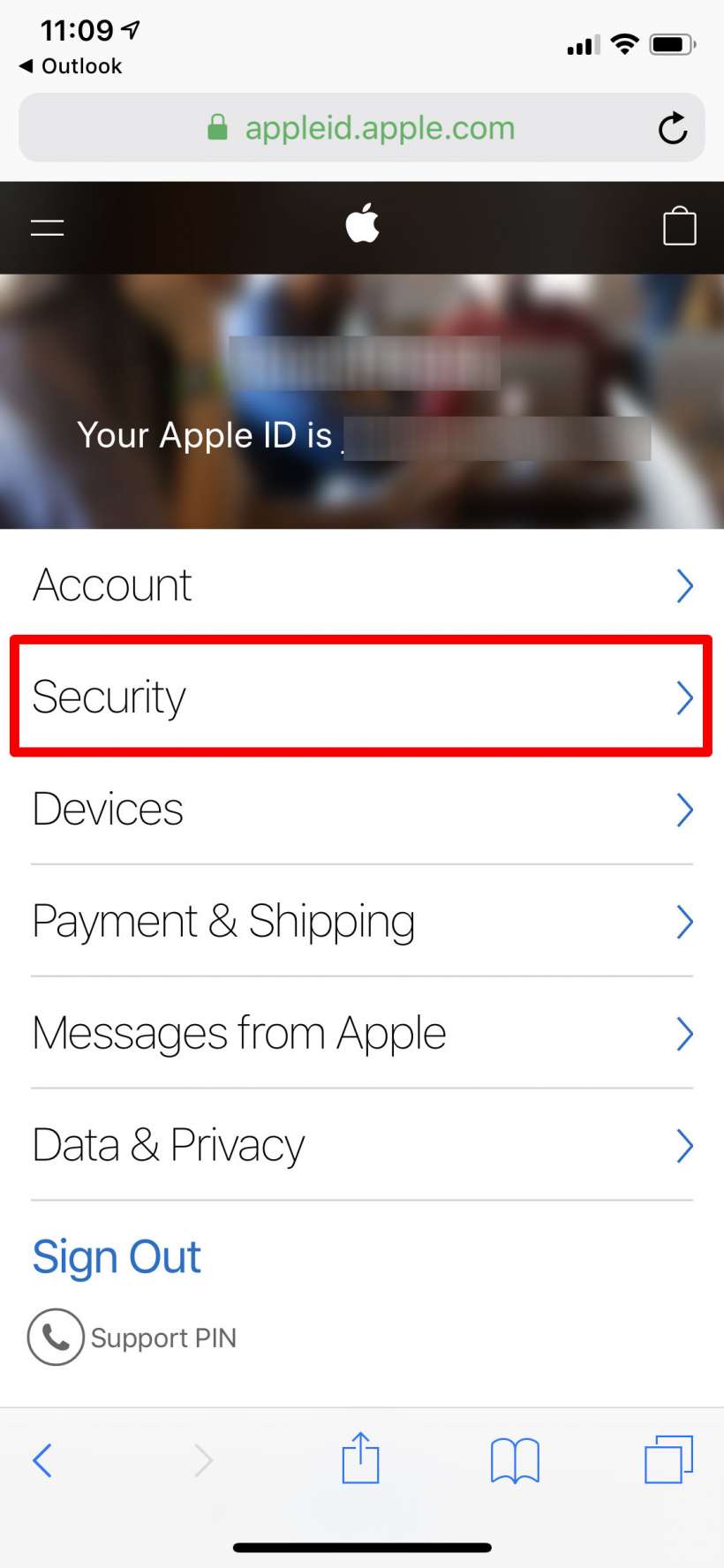
So as long as you’re ready to face the consequences of changing your Apple ID, the process of how to change iCloud email is not difficult. All it will take is logging out of the existing Apple account and then logging into the new one. Parandco crack serial key.
Here’s how to change iCloud email on Mac:
Go to System Preferences ➙ iCloud
Angry birds halloween. Click Sign Out to log out of the existing Apple ID (note the message that logging out of the existing Apple ID may impact iCloud Drive documents and data)
When iCloud finishes logging out of the Apple ID, the iCloud preference pane will change to a simple login screen
Now you can provide data for the new iCloud registration and log in (as long as the email you provide while setting up a new Apple ID does not end in @mac.com or @me.com, iCloud will ask you to set up a new iCloud email address)
How to check iCloud email?
Once you’ve set up your iCloud email, the easiest way to check it is going to icloud.com in your web browser:
Simply enter your Apple ID and password as your iCloud email login
Click the mail icon
Check your iCloud mail
But you could also use iCloud email via the Apple Mail app you can find in the Applications folder — whichever way proves more convenient for you.
How to add iCloud mail account to the Apple Mail app?
How To Add Icloud Email To Outlook 2016 For Mac Osx
Apple Mail comes as the default email client with every Mac using OS X 10.0 or later. It’s a basic, straightforward app and using it to add your iCloud email to the list of accounts is pretty intuitive. Here’s what you do:
Go to System Preferences ➙ Internet Accounts
On the left of the Internet Accounts pane you’ll see the current list of mailboxes, messages, and other internet accounts in use on your Mac
Click the plus at the bottom of the list and select iCloud from the email accounts listed on the right of the screen
Enter your Apple ID and password used at your iCloud email sign in and your iCloud email account will be added to the active list
If you’re looking for more functionality and features on your email, you might want to look broader than your standard Apple Mail app — towards more advanced ones out there.
More robust and full-featured Mail app alternatives
When you’re looking to upgrade from the regular Apple Mail app, take a look at Unibox — an elegant people-centric email client that feels as familiar as a chat or messaging app. You have your contacts list arranged by the last email’s date, and all communication with a particular person listed under their name. Unibox wants to make your life easy — you can write directly within the main app window and visually browse through attachments organized by sender to quickly find what you need.

If security is your number one email concern, a great option to try out is Canary Mail. Its end-to-end encryption ensures that what is sent is read only by you and the person you are communicating with — not anyone else, not even your provider.
Additionally, this email app offers powerful productivity features: natural language search that instantly understands what you are looking for, smart filters that quickly sort through emails and attachments, personalized email templates and read notifications. Canary Mail integrates seamlessly with your favorite apps for files, events, and tasks, and works with your existing accounts on Gmail, Yahoo, Exchange, and iCloud.
Advanced email clients often boast built-in algorithms that learn to tell which emails are likely to be important or unimportant to you, and further highlight or select them for bulk cleaning. Amazingly enough you can set up some of this functionality for your iCloud mail too — by simply fine-tuning inbox rules.
How to set up iCloud mail rules for emails?
Establishing your own rules for email will save you time and help keep your inbox organized and uncluttered. Without so much as touching your mail, you’ll see messages automatically moved to designated folders, marked a certain way, or forwarded to other people.
After you log in to your iCloud account and click Mail, set up rules by simply following these steps:
Click the Show Actions menu button on the bottom left ➙ Rules
On the top right of the panel, click Add a Rule
Now begin putting a rule together, starting at the top of a pop-up window with the If message. From a dropdown box choose conditions like “if a message is from a certain sender has a particular word in the subject.”
In the text box below provide information necessary for the application to fulfill your condition: for example, if you choose “has subject containing,” you would enter a word or phrase in the box that the program needs to look for
Now move to the Then section in the same pop-up window. First select what you want to do with the message, choosing from the options in the first dropdown box. Then complete the process by picking from the next dropdown menu.
Click Done when finished and you’ll see your rule displayed in the list. Follow the same process to set more rules for your inbox.
Now that you’ve setup iCloud email on your Mac, you’ve got yourself a free email accessible from anywhere through icloud.com or email apps that make emailing a breeze. However, sometimes iCloud and the default Mac Mail app might seem to be lacking in power. That’s when you should switch to more professional counterparts.
Best of all, you can find both Unibox and Canary Mail mentioned above on a free trial through Setapp, a platform of more than 150 useful Mac apps and tools that could improve nearly every interaction you have with your Mac. Time to rule your inbox, no?
Meantime, prepare for all the awesome things you can do with Setapp.
Read onSign Up
Posted February 13, 2016 by Leomar Umpad in Apple iPhone, Apps, Microsoft Outlook, Windows
How To Add Icloud Email To Outlook 2016 For Mac Os
Just like any other email account, you can set up an iCloud email account on Microsoft Outlook. Using the right configuration and settings, you can now start sending and receiving email messages from your iCloud email account on Microsoft Outlook. If you were able to create a free iCloud email account and you want to configure your iCloud email into Microsoft Outlook, then this tutorial is for you.
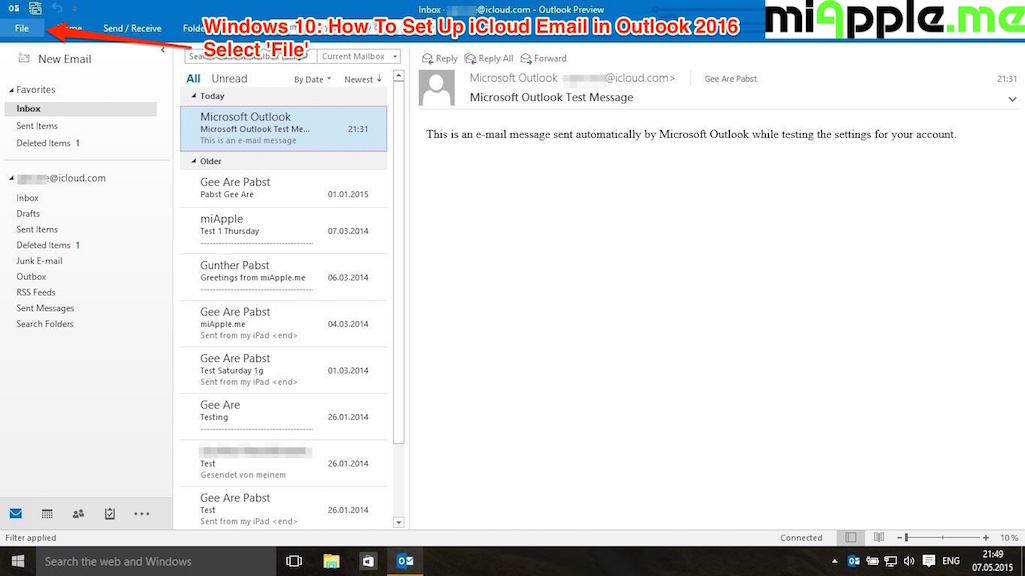
Set Up an iCloud Email Account on Microsoft Outlook
To start using your iCloud email on Microsoft Outlook, you need to follow these procedures and configurations:
1.Open the Microsoft Outlook program on your computer.
2.Once Outlook is opened, tap on the File menu.
3.From the File menu, click on Add Account.
4.On the Add Account wizard, click on the tick button for Manual setup or additional server types.
5.Choose the Pop or IMAP service.
6.Enter your Name and your iCloud email address.
7.In the Account Type, choose IMAP.
8.In the Incoming mail server, input: imap.mail.me.com
9.In the Outgoing mail server, input: smtp.mail.me.com
10.In the Logon Information, input your iCloud username and password. You do not need to put the suffix, @icloud.com on your username. However, if there is an error encountered, try to put your full email address and see if it fixes the problem.
11.Put a check mark on Remember password and Require logon using Secure Password Authentication (SPA).
12.Click on More Settings.
13.On the General tab, input the name of your account. You can choose any name that you want as this tab does not affect the connection in any way.
14.On the Outgoing Server tab, put a check mark on My outgoing server (SMTP) requires authentication.
15.Still on the Outgoing Server tab, click on the tick mark for Use same settings as my incoming mail server.
16.On the Advanced tab, enter 993 on Incoming server (IMAP) then choose an SSL connection from the drop-down box.
17.Still on the Advanced tab, enter 587 on Outgoing server (SMTP) then choose Auto connection from the drop-down box. Leave every other options as they are.
18.Click on OK when you are done.
19.Tap on Next to test the settings and configurations.
20.The test will show a completed incoming and outgoing test. Tap on Close.
21.You are all set. Tap on the Finish button.
22.Your iCloud account will now be visible on Outlook.
23.You can send a test email message to ensure that your email is working.
The procedure may seem lengthy because all areas are covered. If you have problems with any of the procedures above, let us know in the comments section so that we can help you.
About Leomar Umpad
View more articles by Leomar Umpad
How To Add Icloud Email To Outlook 2016 For Macbook Pro
The Conversation
Follow the reactions below and share your own thoughts.