Heatmaps are one of the most helpful tools for website owners after agile planning. These types of heatmap analytics software allow owners of online businesses to see where page visitors are clicking and scrolling on their websites. This insight into visitor behavior is something that no online business could be without. That is why it is so crucial to understand how to utilize heatmapping tools for the best results. Find out how to best use heatmap analytics to optimize your online business website in this post.
- Optimize Your Website With Heat Mapping Software
- Optimize Your Website With Heat Mapping Device
- Optimize Your Website With Heat Mapping Tool
Use The Best Tools
Heatmaps can help you refine your website and boost engagement, but how do they work? We demystify the basics of this popular web design tool. Considering that a picture is worth a thousand words, a heatmap is one of the most useful tools available today for understanding how users and customers view and use your website. Heatmapping is an investigative technique that’s often used in conversation rate optimisation (CRO), the area of digital marketing which is concerned with increasing the profitability of a website by making more of its existing traffic. In essence, it involves analysing the journeys taken by site users in order to determine how the user. Heatmapping Can Help Optimize Website Usability. Published: April 7, 2014 More in: FEDweek IT. Heatmapping tools show what areas of a web site are most frequently clicked, and in some cases.
It’s the EXACT same thing with your website. You have to analyze your layout, design and content and constantly improve it. If you can increase engagement using data, you can acquire more customers for LESS MONEY, and can subsequently invest more money in your digital marketing execution to grow revenue at scale. Optimize and refine your website. A heatmap helps you determine if people reach important content, follow the main links, buttons, and CTAs, and/or experience issues across devices while browsing your site.
Online business owners must find the best heatmap analytics tools for their particular needs. Of course, you could be limited by your budget. But, there are plenty of affordable heatmaps analytics solutions available at all price points. You should also consider what types of heatmap analysis features each option offers. Nctmy paper buses cork. That way, your business can gain the insight it most needs. If you want to make your heatmap analytics processes as effective as possible, make certain to buy the best tools for your particular online business needs.
Consider Gender
When creating heatmaps, make sure to generate specific examples based on gender. When it comes to surfing the web, men and women gravitate towards entirely different things. This is not surprising. However, it is something that too few website business owners consider when generating heatmaps. Use the insight into gender preferences to better optimize web designs for men and women. That will only be possible if you use these heatmap analytics best practices.
Sample Size
Optimize Your Website With Heat Mapping Software
You must also be sure to select the correct sample size for your data sample. Heatmapping is only effective if you have a sample size big enough to base your analysis off of. Otherwise, your heatmapping analysis results will not even prove anything regarding your browser-based salon software users. For most websites, roughly 2000 page views is a nice sample size. That way, your heatmap analytics process is sound and legitimate.
Activity Recording
Use activity recording tools to create a comprehensive heatmaps analytics strategy. These types of website visitor activity recording features are available on a number of top heatmapping software. Activity recording heatmaps make it easy to visualize what users are doing on your website in real-time. This is an invaluable insight to inform business website design. That is why you need to make sure to use this technology for the best heatmapping analytics tactics that will drive results.
Enact Change
Once you have completed your heatmap analysis, use you results to make changes to your websites. If you do not optimize your business website, your heatmap analytics strategies will all have been for nought. Optimize business website using the evidence your sample size provided. You are sure to experience a huge spike in your user’s average session duration data.
For online business owners, data analytics is a crucial part of running a business successfully. This is something they will not tell you in even the best online coding classes. The heatmapping analytics best practices detailed above will help you use heatmap tools to optimize website pages for what your visitors want to see. This is the best way to succeed in online business. Make sure you use the heatmapping tips featured above to succeed in your field.
Considering that a picture is worth a thousand words, a heatmap is one of the most useful tools available today for understanding how users and customers view and use your website. But what is a heatmap, and how can it help your business reach its specific digital goals?
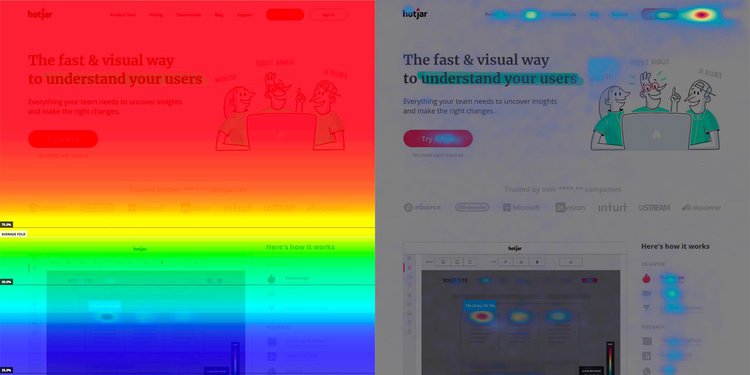
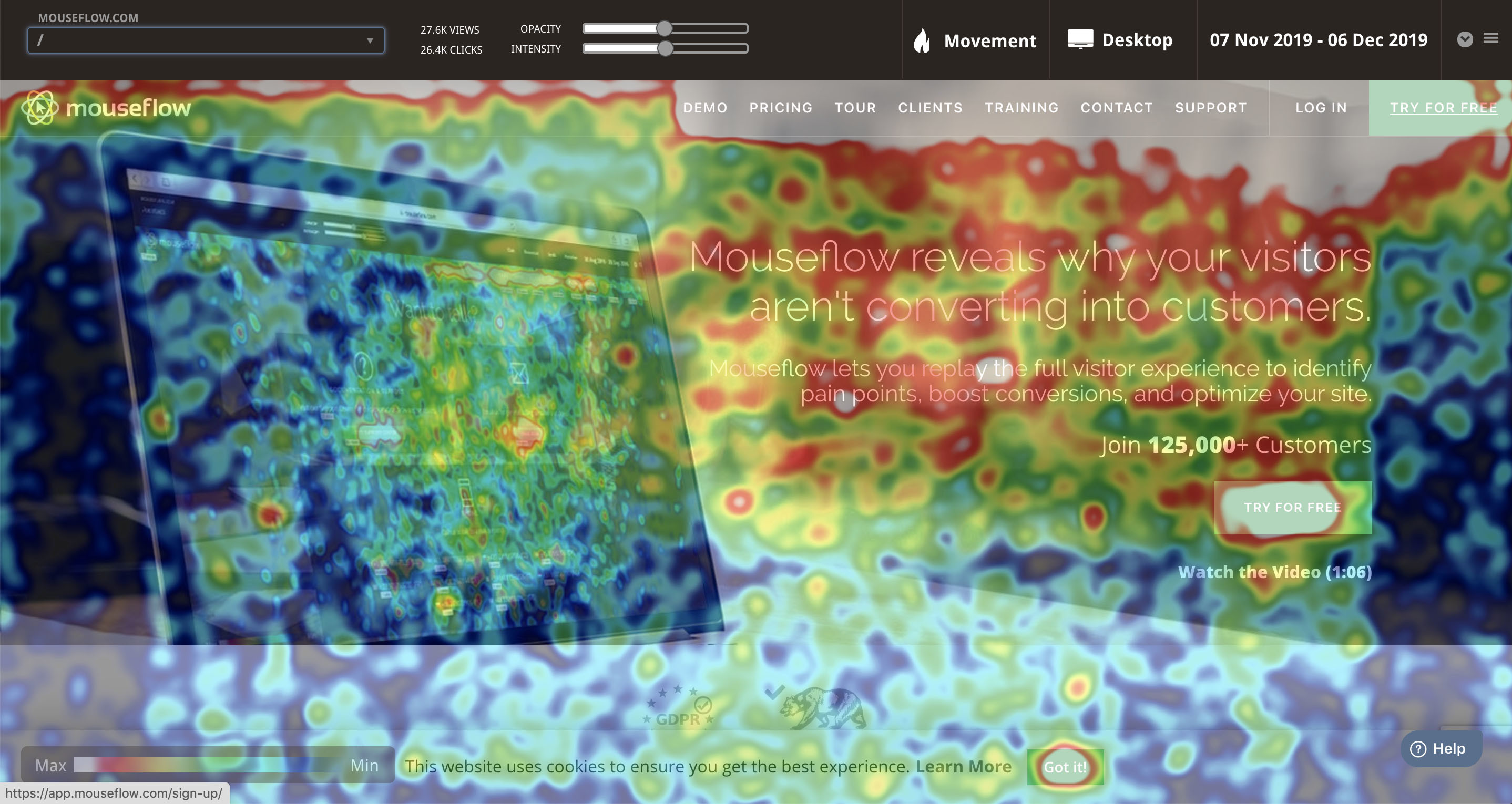
At its simplest, a heatmap is a visual representation of data that uses hotter colors to represent larger values or magnitudes, and cooler colors to represent smaller values. They’re used in a wide range of fields from geography to molecular biology; when it comes to web design, we use heatmaps to visualize a user’s behavior on a webpage or site.
3 Types of Heatmapping

The process of creating one is called heatmapping, and it’s typically done by working with an behavioral analytics service such as Crazy Egg or Hotjar (which is what we use at Informatics).
Heatmaps in the web design world come in three main styles:
- Click maps, which show where users click on your webpage, from the most clicked areas or buttons (deep red) to the least (deep blue).
- Scroll maps, which show what percentage of users make it down to a certain section of your page.
- Move/hover maps, which show the location and movement of a user’s mouse as they navigate a page. These can act as a rough proxy for the user’s eye, and reveal areas of greater or lesser interest on your webpage.
Of course, you could gather all this information by crunching session data captured by platforms like Google Analytics, but the beauty of heatmapping is that it offers highly visual insights that can reveal challenges and solutions faster than quantitative methods alone.
Are users ignoring your call to action, becoming confused or dropping off before seeing important content below the fold? Heatmaps can show where users are clicking or moving, and potentially suggest areas for improvement, whether that means changing a button or an entire section. They can also be combined with other feedback tools like A/B testing or on-site surveys to develop even deeper insights and more efficient websites, ultimately improving your company’s digital presence and bottom line.
If you’re interested in using heatmapping to solve tricky problems with your website, or maybe just have a few quick questions, feel free to reach out to the digital marketing experts at Informatics!
 Subscribe
 Optimize Your Website With Heat Mapping Device
Filter by Subject

Previous Blog Post
5 Takeaways from the GA4 Google Analytics Update
With the latest Google Analytics update (GA4) being rolled out in October, learn some important takeaways on how it could affect your 2021 marketing strategy.
Next Blog Post
Think Fast: Google's Core Web Vitals Are HereOptimize Your Website With Heat Mapping Tool
Google is elevating the importance of (fast) page experiences when it comes to search. Here's what you need to know to stay in the race.